
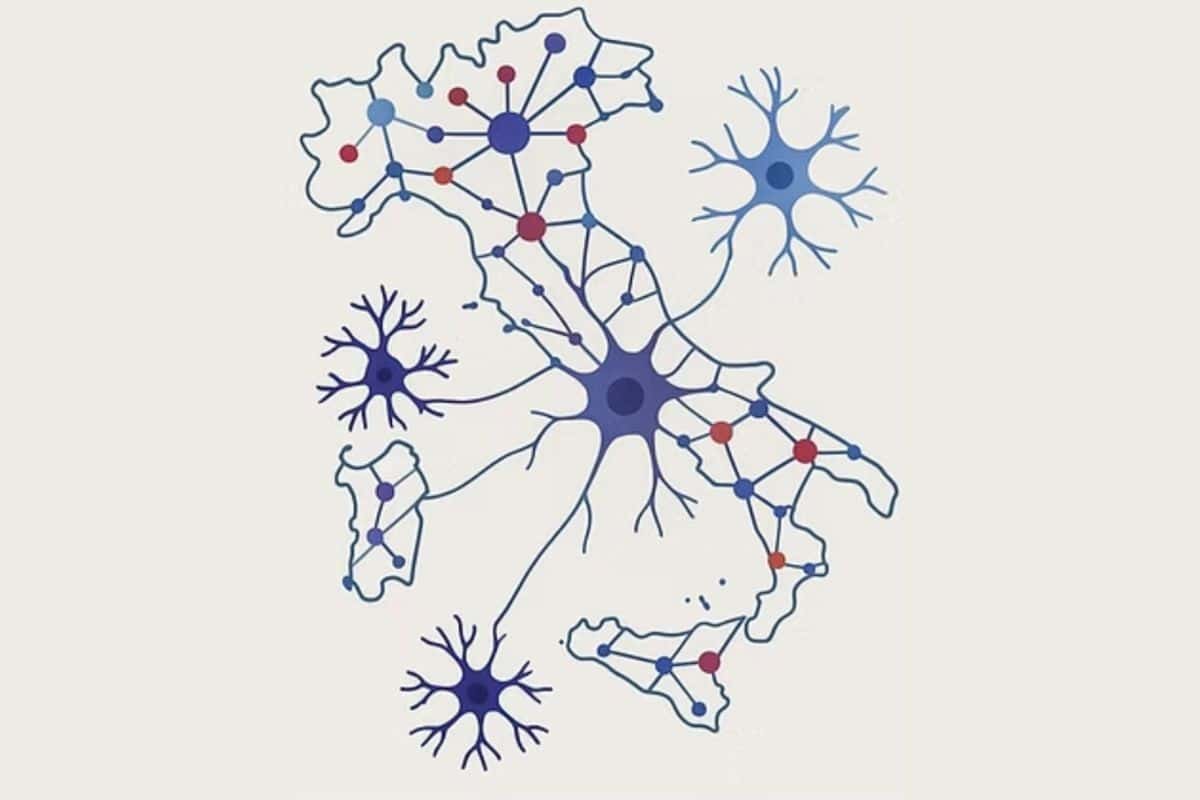
The Second Italian Glia Network Symposium was held online on November 26, 2025, bringing together the Italian and international scientific community studying the role of glial cells in the nervous system. The event was organized by the Italian Glia Network (IGN), a self-managed network of researchers based in Italy and abroad, focused on astrocytes, microglia, and oligodendrocytes, and their contribution to brain function and neurological disorders.
Gabriele Losi, researcher at Cnr Nano, participated as co-chair of the symposium, overseeing the scientific organization for IGN and moderating the key sessions of the event. “The study of glial cells is currently one of the most dynamic areas of neuroscience,” explains Losi. “Far from being merely supportive, glial cells actively participate in synaptic transmission, contribute to the development and function of neural circuits, and are involved in a wide range of neurological disorders. Understanding their mechanisms is essential for developing new therapeutic approaches for conditions such as Alzheimer’s, Parkinson’s, multiple sclerosis, as well as neurodevelopmental disorders including autism and cognitive impairments.”
The symposium featured eight short talks selected from a large pool of applications, all presented by young researchers working on glial cell biology. The event concluded with a plenary lecture by Dr. Tommaso Fellin (IIT, Genoa). Discussions were lively and interactive, with over 100 participants from Italy and the United States.
Within this research landscape, Cnr Nano is also actively engaged in studying glial cells and the molecular mechanisms that regulate neural function, as part of the institute’s broader bio-nanotechnology activities. At Cnr Nano laboratories, often in collaboration with other research groups, scientists investigate the molecular processes underlying neurological disorders, aiming to develop new tools for early diagnosis and innovative therapeutic strategies. Basic research on glial cells is playing an increasingly central role in modern neuroscience, a field that requires integrated skills and a highly multidisciplinary approach.
“The success of the Second Italian Glia Network Symposium confirms the vitality of the IGN network and strengthens an already established event, following the positive response to last year’s inaugural symposium”, says Losi. This edition once again highlighted the importance of creating opportunities for scientific exchange, fostering new interactions and future collaborations among researchers studying glial cells.