Examining gender discrimination for more equitable science
A workshop at Cnr addressed gender discrimination in research, offering strategies for promoting equality. Expert discussions and group sessions highlighted biases and the need for inclusive approaches, with contributions from Cnr Nano, supporting the Cnr Gender Equality Plan.
A workshop organized by the Institute for Research on Population and Social Policy (CNR-Irpps) aimed at all staff of the National Research Council (CNR) was held at the Milan 1 Research Area on June 21. The event entitled “Know Them to Avoid Them. Ideas to Counter Discrimination in Science” addressed the issue of recognizing latent discrimination in the academic and organizational life of the CNR. It was led by the Gender Equality Officer Ilaria Di Tullio and the training group of the H2020 MINDtheGEPs project.
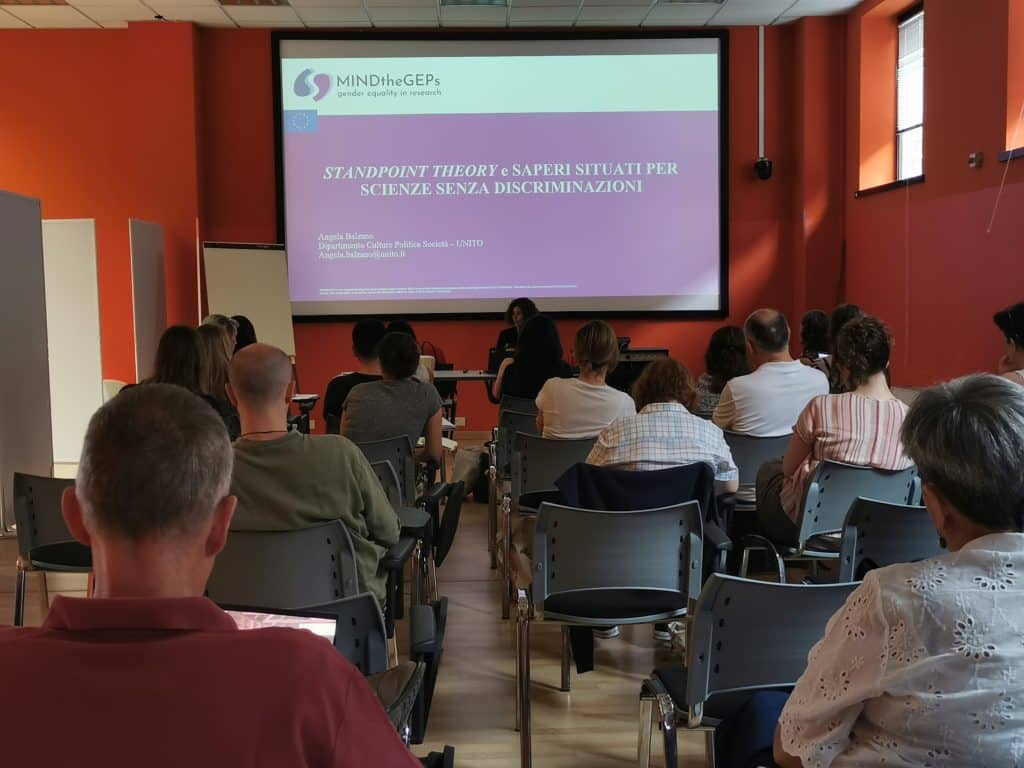
The day began with an introductory session by gender expert Angela Balzano from the University of Turin, who illustrated the multiple dimensions of discrimination, focusing on the importance of recognizing them to effectively counteract them. Her talk offered very stimulating insights for the participants. In particular, Balzano explained how the approach known as Standpoint Theory can be effective in analyzing inequalities and promoting a discrimination-free science. Standpoint theory, which originated within feminist studies to extend to other areas of the social sciences, emphasizes the importance of considering the perspectives of marginalized people to gain a deeper and more critical understanding of society. “The basic idea is that people belonging to marginalized groups, such as women in scientific research, have a unique and privileged perspective on social reality because they directly experience injustices and discriminations that those in dominant groups often do not live through and are unable to recognize,” explained Balzano.
Next, Melanie Timpel (Cnr-Imem), Luisa Neri (Cnr-Nano), and Martina Mattiazzi (Cnr-Ismed) took the floor with an enlightening three-voice presentation titled “Numbers, Words, and the Language of Disparity.” They presented data and examples related to gender disparity in the context of European, national, and internal Cnr research context. Melanie Timpel presented data on inequality in scientific careers that show that although the trend is positive, there is still a strong inequality in leadership positions. Luisa Neri from Cnr-Nano examined the use of language in representing female scientists, considering the effects on visibility and self-perception, especially in the media. Finally, Martina Mattiazzi (Cnr-Ismed) focused on basic concepts of discrimination, such as stereotypes, biases, and privilege, emphasizing how gender issues, also from an intersectional perspective, are relevant for the entire research community.
The three speakers, along with five other colleagues from Cnr, are trainers for the MINDtheGEPs project, funded by the European Union under the Horizon 2020 program. The project aims to promote gender equality in the research field through the development and implementation of Gender Equality Plans (GEPs) in participating institutions. Project activities include training for research staff, mentoring, leadership training on gender biases and stereotypes, promoting gender equality in scientific careers, and integrating the gender dimension into research content.
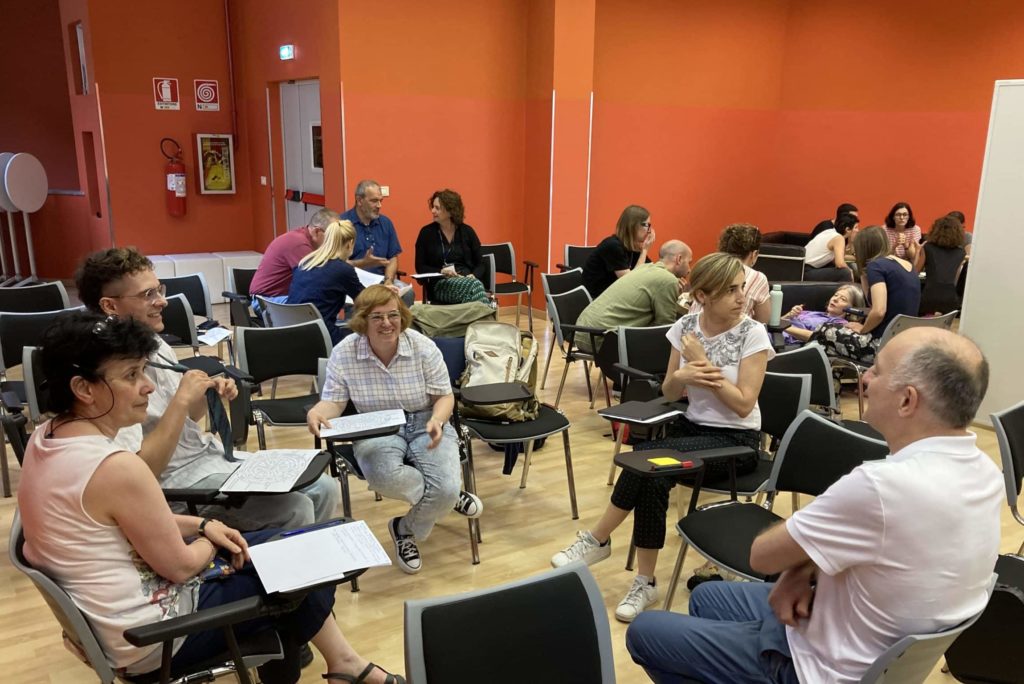
In the central session of the workshop, participants collaborated in groups to identify forms of discrimination found in writings depicting experiences in the world of scientific research. A plenary feedback session followed, during which Ilaria Di Tullio, Angela Balzano, and the trainers discussed the results that emerged from the discussions.
With Gender Equality Officer Di Tullio's closing remarks, the workshop concluded as another step forward in CNR's efforts to address and overcome gender discrimination, consolidating the importance of inclusive and equality strategies in our research communities.
This event represents one of the actions outlined in the Cnr Gender Equality Plan 2022-2024, Objective B.3, as indicated in DG Resolution no.139 of 2022.
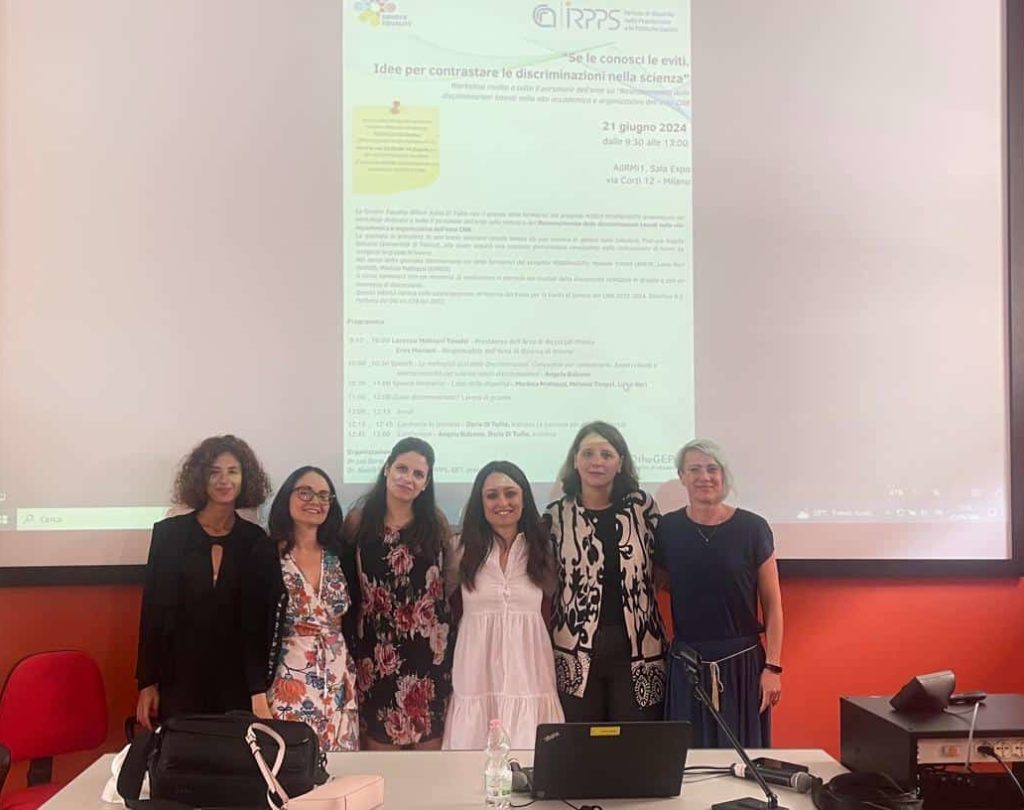
Workshop Organizing committee and speakers (Angela Balzano, Claudia Caddeo, Martina Mattiazzi, Ilaria Di Tullio, Luisa Neri, Melanie Timpel)
The Cnr Nano researcher joins ITATEC in recognition of her scientific contributions to terahertz photonics, quantum technologies and advanced materials…
A workshop at Cnr addressed gender discrimination in research, offering strategies for promoting equality. Expert discussions and group sessions highlighted…
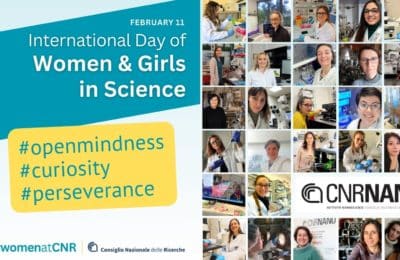
On 11 February, the social campaign #womenatCNR relaunches a choral message of inspiration and encouragement for the women and girls…
We use cookies on our website to give you the most relevant experience by remembering your preferences and repeat visits. By clicking “Accept All”, you consent to the use of ALL the cookies. However, you may visit "Cookie Settings" to provide a controlled consent.
This website uses cookies to improve your experience while you navigate through the website. Out of these, the cookies that are categorized as necessary are stored on your browser as they are essential for the working of basic functionalities of the website. We also use third-party cookies that help us analyze and understand how you use this website. These cookies will be stored in your browser only with your consent. You also have the option to opt-out of these cookies. But opting out of some of these cookies may affect your browsing experience.
Necessary cookies are absolutely essential for the website to function properly. These cookies ensure basic functionalities and security features of the website, anonymously.
Cookie
Duration
Description
cookielawinfo-checkbox-analytics
11 months
This cookie is set by GDPR Cookie Consent plugin. The cookie is used to store the user consent for the cookies in the category "Analytics".
cookielawinfo-checkbox-functional
11 months
The cookie is set by GDPR cookie consent to record the user consent for the cookies in the category "Functional".
cookielawinfo-checkbox-necessary
11 months
This cookie is set by GDPR Cookie Consent plugin. The cookies is used to store the user consent for the cookies in the category "Necessary".
cookielawinfo-checkbox-others
11 months
This cookie is set by GDPR Cookie Consent plugin. The cookie is used to store the user consent for the cookies in the category "Other.
cookielawinfo-checkbox-performance
11 months
This cookie is set by GDPR Cookie Consent plugin. The cookie is used to store the user consent for the cookies in the category "Performance".
viewed_cookie_policy
11 months
The cookie is set by the GDPR Cookie Consent plugin and is used to store whether or not user has consented to the use of cookies. It does not store any personal data.
Functional cookies help to perform certain functionalities like sharing the content of the website on social media platforms, collect feedbacks, and other third-party features.
Performance cookies are used to understand and analyze the key performance indexes of the website which helps in delivering a better user experience for the visitors.
Analytical cookies are used to understand how visitors interact with the website. These cookies help provide information on metrics the number of visitors, bounce rate, traffic source, etc.
Advertisement cookies are used to provide visitors with relevant ads and marketing campaigns. These cookies track visitors across websites and collect information to provide customized ads.