
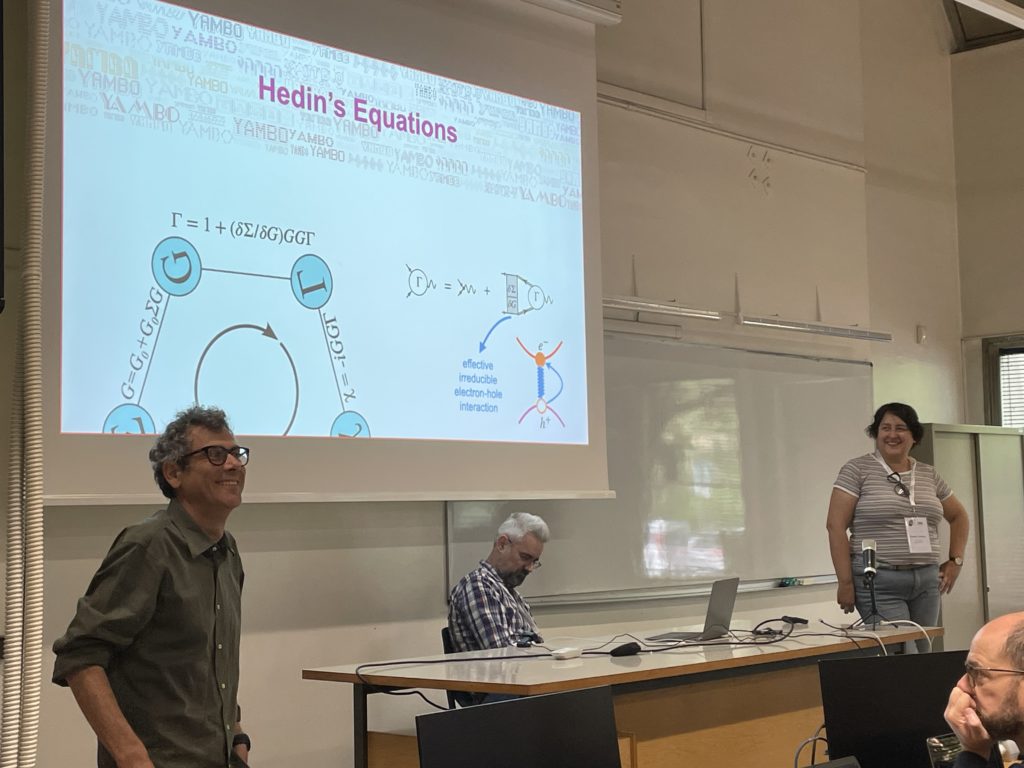
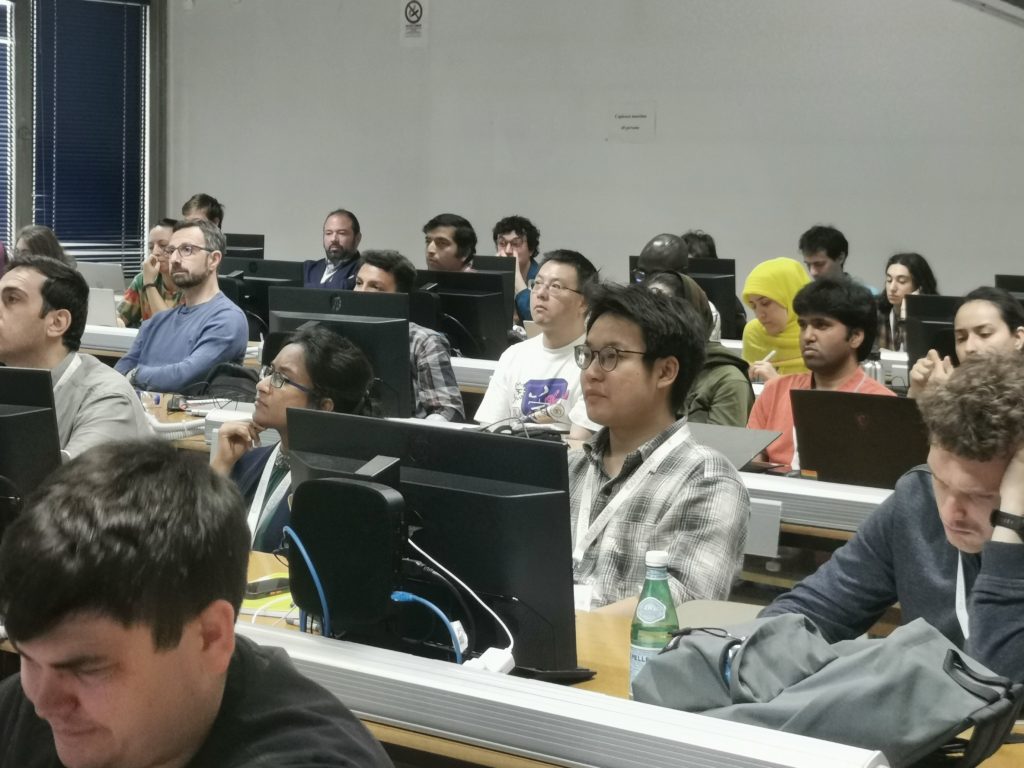
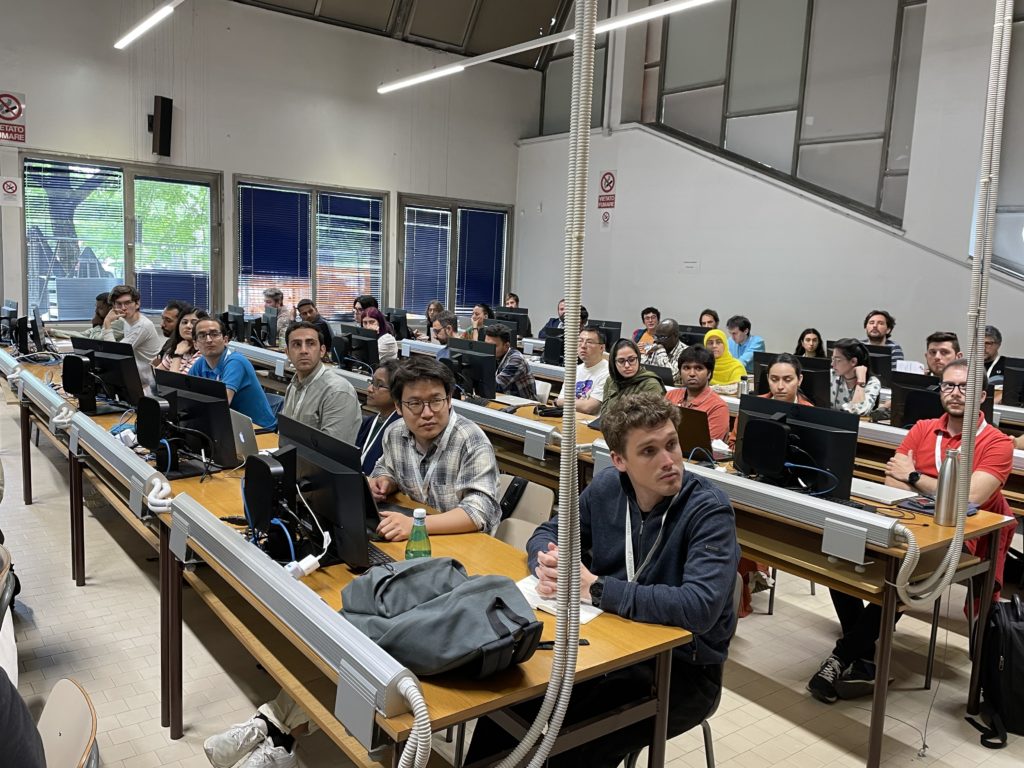
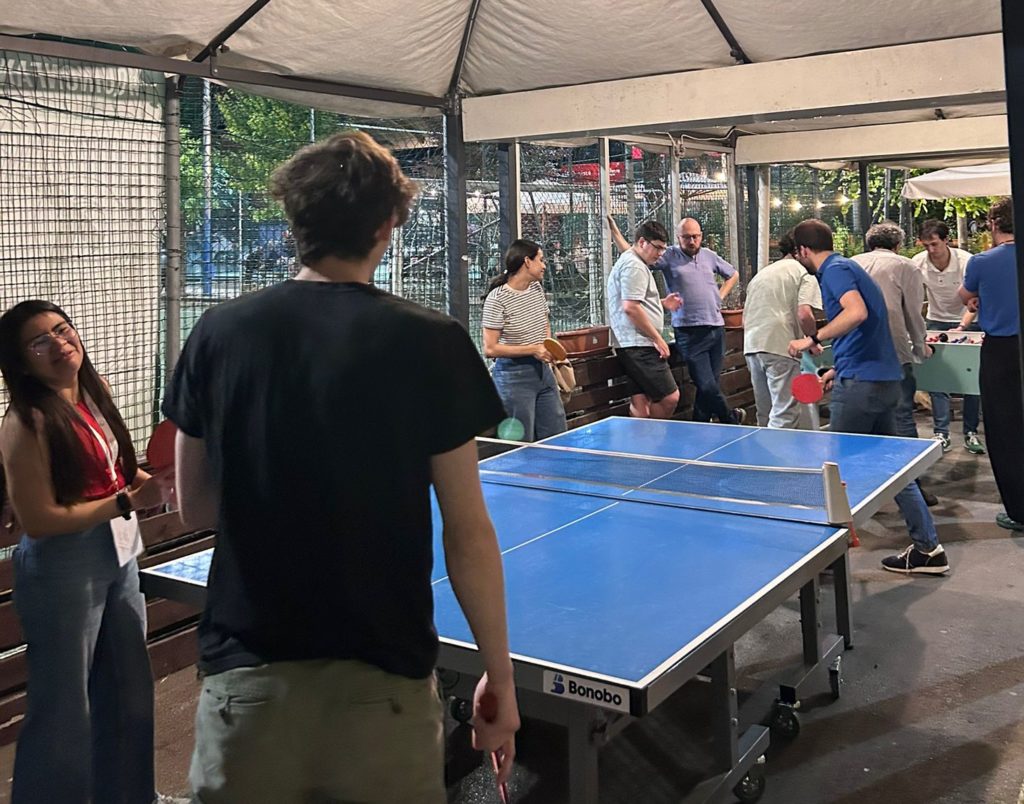

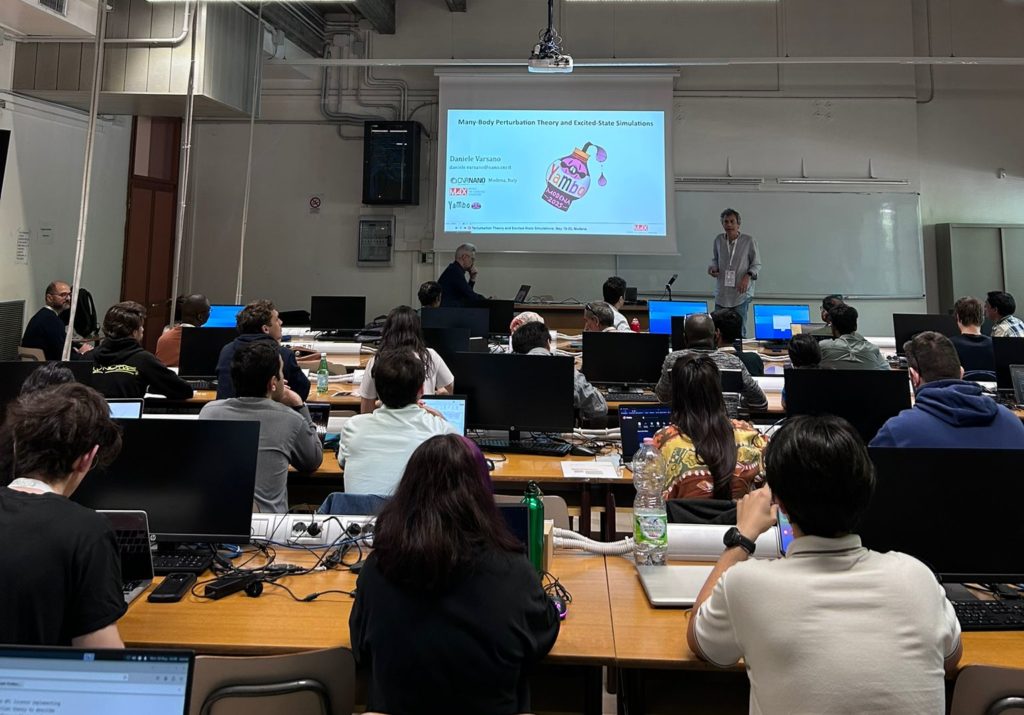
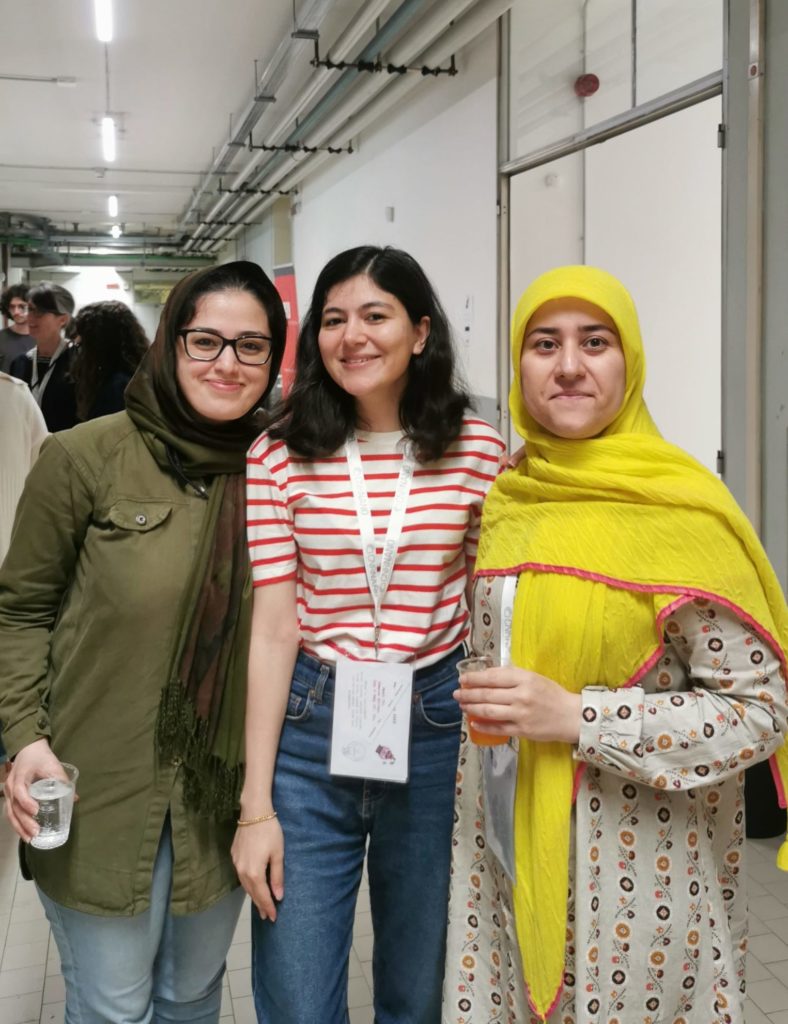

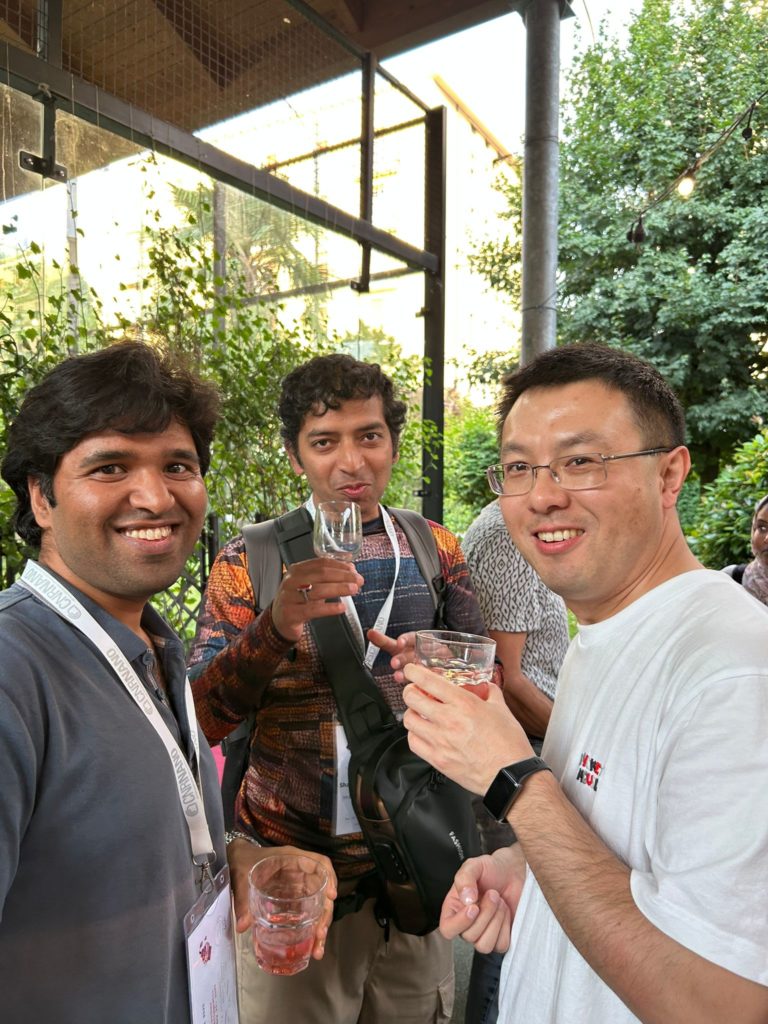
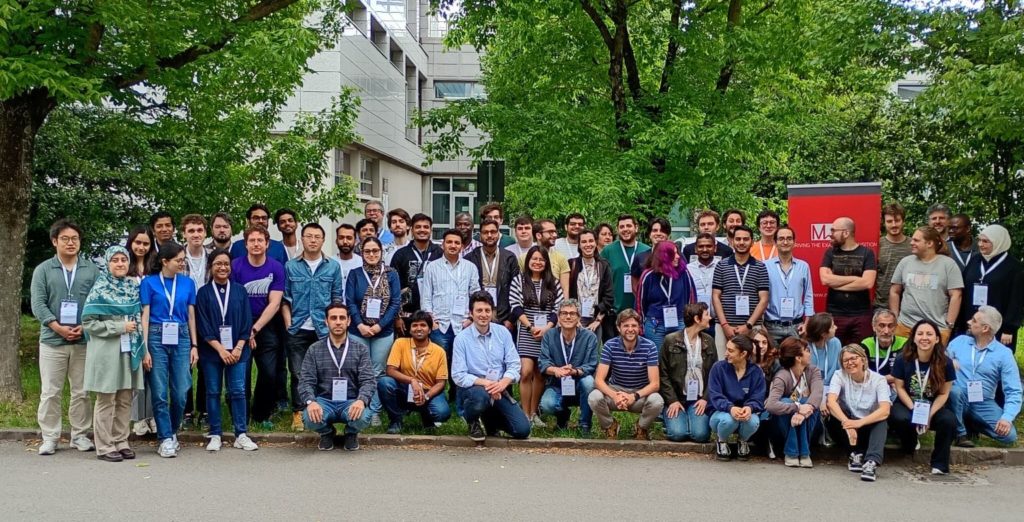
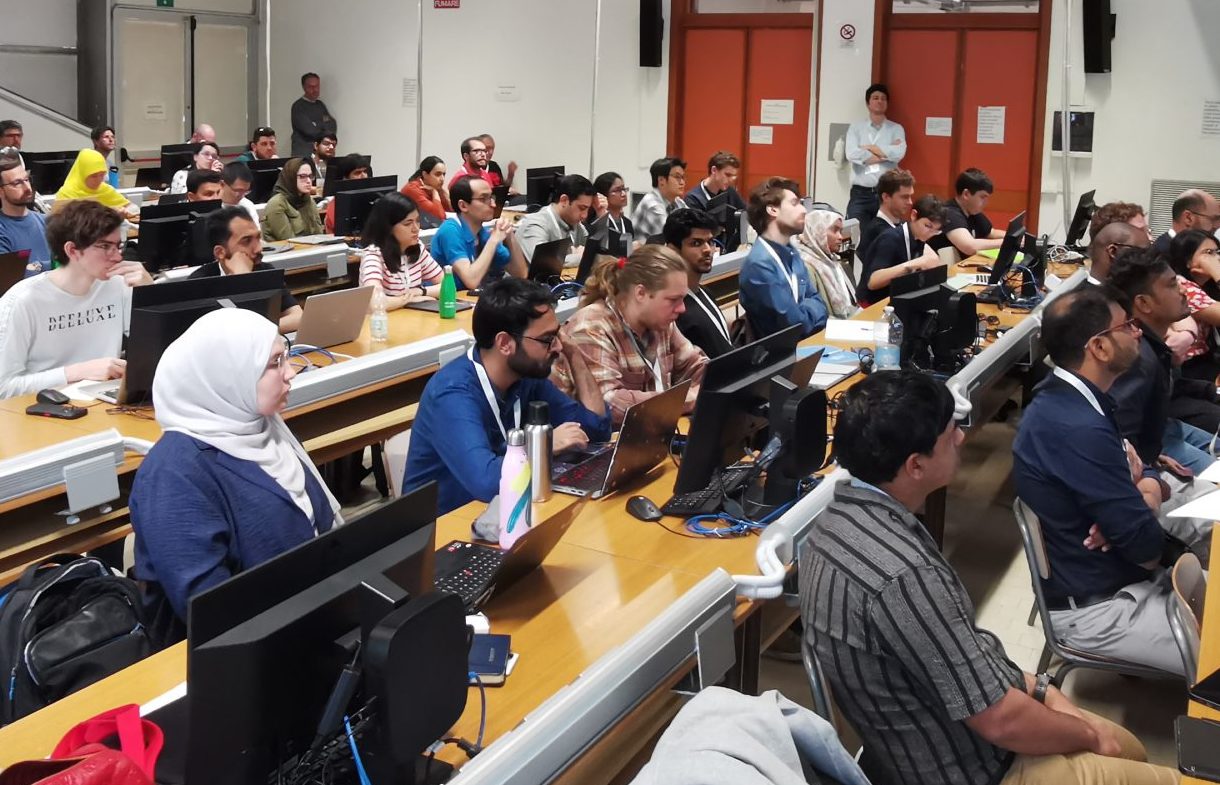
From May 19 to 23, Modena welcomed around fifty early-career scientists from fifteen different countries – spanning from Iceland to Guatemala, including India and several European nations – for the 2025 edition of the Yambo School – Many-Body Perturbation Theory and Excited-State Simulations. The international workshop, held at the university campus in Via Campi, was organized by the Cnr Nano in collaboration with Università di Modena e Reggio Emilia and Università di Roma Tor Vergata.
The school focused on advanced computational methods for investigating light–matter interactions, a key area for the design of next-generation solar cells, optoelectronic devices such as LEDs and fiber optics, and quantum technologies. Rather than relying on experimental techniques, the workshop emphasized simulation-based approaches using high-performance computing (HPC) platforms, including Leonardo, the Cineca supercomputer among the most powerful in Europe.
Throughout the five-day program, participants attended a series of lectures – from fundamentals to advanced topics – on many-body perturbation theory (MBPT), covering the GW approximation, the Bethe–Salpeter equation (BSE), non-linear optical phenomena, and recent algorithmic developments for 2D materials and metals. Hands-on sessions were dedicated to practical simulations using YAMBO, an open-source code developed in Italy and maintained by an active team at Cnr Nano in Modena. Participants also trained in Python-based workflows for post-processing and data analysis through the YamboPy package.
YAMBO is one of the flagship codes of the MaX Centre of Excellence – a European CoE which enables materials modelling, simulations, discovery and design at the frontiers of the current and future High Performance Computing (HPC), High Throughput Computing (HTC) and data analytics technologies.
A distinctive aspect of this year’s edition was the commitment to promoting gender balance in science: 30% of the participants were women, meeting the organizers’ expectations.
“We are proud to see so much international interest and participation in Modena. It confirms the global relevance of our research community and the YAMBO code,” said Daniele Varsano, researcher at Cnr Nano and member of the organizing committee. “The level of engagement during the school – both in lectures and hands-on sessions – was truly outstanding”.
Thanks to the joint efforts of Cnr Nano and the University of Modena and Reggio Emilia, Modena continues to strengthen its role as a hub for theoretical and computational materials science, attracting talents and collaborations from across the globe.


| Cookie | Duration | Description |
|---|---|---|
| cookielawinfo-checkbox-analytics | 11 months | This cookie is set by GDPR Cookie Consent plugin. The cookie is used to store the user consent for the cookies in the category "Analytics". |
| cookielawinfo-checkbox-functional | 11 months | The cookie is set by GDPR cookie consent to record the user consent for the cookies in the category "Functional". |
| cookielawinfo-checkbox-necessary | 11 months | This cookie is set by GDPR Cookie Consent plugin. The cookies is used to store the user consent for the cookies in the category "Necessary". |
| cookielawinfo-checkbox-others | 11 months | This cookie is set by GDPR Cookie Consent plugin. The cookie is used to store the user consent for the cookies in the category "Other. |
| cookielawinfo-checkbox-performance | 11 months | This cookie is set by GDPR Cookie Consent plugin. The cookie is used to store the user consent for the cookies in the category "Performance". |
| viewed_cookie_policy | 11 months | The cookie is set by the GDPR Cookie Consent plugin and is used to store whether or not user has consented to the use of cookies. It does not store any personal data. |