

Nanotechnologies and AI for precision oenology
The "VIOLoC" project has been launched, it aims to optimize wine production processes by exploiting micro and nano-technologies and artificial intelligence, thanks to UniPisa, UniTuscia and Cnr Nano

VIOLoC is the project born from a collaboration between the University of Pisa, CnrNano and the University of Tuscia with the aim of starting a technological revolution in the world of wine and oil analytics thanks to the development and application of microfluidimetric type micro-sensors for the analysis of polyphenols in wine and oil.


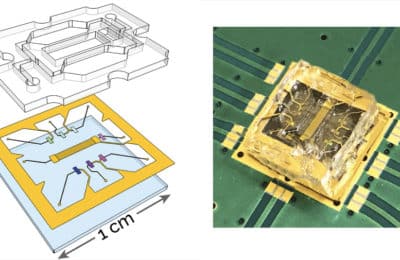
The technological core of VIOLoC lies in a micron-sized lab-on-a-chip with remote connectivity (clouding). The new lab-on-a-chip is based on microfluidics and will be designed within the Marco Cecchini's research group at Cnr Nano. It will contain sensors for the analysis of polyphenols, acids, sugars in real time. The collected data can be sent to the cloud, processed with artificial intelligence algorithms and returned to companies in the form of numerical data. There will be no moving bottles, only signals and numbers will move.


Financed by the Ministry of University and Research through the resources of the Fondo Integrativo Speciale per la Ricerca (FISR), the VIOLoC ("Analisi di VIno e OLio mediante un Laboratorio on-Chip (LoC) a remote connectivity")project involves the University of Pisa, the University of Tuscia and the Istituto Nanoscienze of the National research council (CnrNano). Among the partner companies there is also Sensi Vini, a Tuscan company that has always been committed to research and that will begin testing the sensor right from the next harvest.
VIOLoC is the project born from a collaboration between the University of Pisa, CnrNano and the University of Tuscia with the aim of starting a technological revolution in the world of wine and oil analytics thanks to the development and application of microfluidimetric type micro-sensors for the analysis of polyphenols in wine and oil.


The technological core of VIOLoC lies in a micron-sized lab-on-a-chip with remote connectivity (clouding). The new lab-on-a-chip is based on microfluidics and will be designed within the Marco Cecchini’s research group at Cnr Nano. It will contain sensors for the analysis of polyphenols, acids, sugars in real time. The collected data can be sent to the cloud, processed with artificial intelligence algorithms and returned to companies in the form of numerical data. There will be no moving bottles, only signals and numbers will move.


Financed by the Ministry of University and Research through the resources of the Fondo Integrativo Speciale per la Ricerca (FISR), the VIOLoC (“Analisi di VIno e OLio mediante un Laboratorio on-Chip (LoC) a remote connectivity”)project involves the University of Pisa, the University of Tuscia and the Istituto Nanoscienze of the National research council (CnrNano). Among the partner companies there is also Sensi Vini, a Tuscan company that has always been committed to research and that will begin testing the sensor right from the next harvest.

Related Content

Core–shell nanoparticles help DLC coatings stay low-friction, even under humid conditions

Core–shell nanoparticles help DLC coatings stay low-friction, even under humid conditions

Researchers at Cnr Nano have developed diamond-like carbon coatings enhanced with graphitic nanodiamonds, achieving ultra-low friction even in humid environments.…
Cnr Nano at the European Researchers’ Night 2025: exploring nanoscience in Modena and Pisa

Cnr Nano at the European Researchers’ Night 2025: exploring nanoscience in Modena and Pisa

European Researchers’ Night is back – and so is our commitment. From the mysteries of quantum mechanics to advanced materials,…
Empowering young scientists in materials science

Empowering young scientists in materials science

From May 19–23, Cnr Nano hosted the YAMBO School 2025 in Modena, training young researchers from 15 countries in excited-state…