
Cnr Nano is among the Italian partners of MaterialsCommons, a new Horizon Europe project that aims to build a pan-European digital infrastructure for materials research and development. The project officially started on 1 June 2026, and its kick-off meeting was held on 16–17 June at the Karlsruhe Institute of Technology (KIT) in Karlsruhe, Germany. Coordinated by Prof. Peter Gumbsch from Fraunhofer IWM/KIT, MaterialsCommons brings together 26 research institutions from 14 countries and more than 30 industrial partners, with a total funding of 28 million euros.
Materials research increasingly depends on large amounts of data produced by experiments, simulations and industrial processes. Today, however, these data are often stored in different places, described in different ways, and difficult to compare or reuse. MaterialsCommons will address this fragmentation by creating a common digital environment where researchers and companies can access distributed data, workflows and AI tools more easily and securely, without the need to move all data into a single central repository.
The project will connect existing European infrastructures and develop shared tools to make materials data easier to find, understand and use. Common vocabularies, metadata standards, interoperable workflows and AI-ready data services will help researchers work across different disciplines, laboratories and countries, supporting more reproducible and efficient materials science.
The Italian National Research Council (CNR) participates in MaterialsCommons through the Istituto Nanoscienze (Cnr Nano), with a leading role in Work Package 9, “Community data”, coordinated by Deborah Prezzi, Cnr Nano senior researcher at the Modena unit. WP9 will test the tools and standards developed in the project on real and representative scientific data, with the goal of understanding how well the MaterialsCommons infrastructure works in practice and how it can be improved to meet the needs of research communities.
The activities led by Cnr Nano will focus on challenges that are common in everyday materials research: incomplete information, different experimental calibrations, heterogeneous data formats, limited reproducibility of workflows, and the difficulty of comparing computational and experimental results. The work will involve several types of data, including transmission electron microscopy, spectroscopy and metrology, and mechanical properties.
“MaterialsCommons is a unique opportunity to address, at the European level, problems that are part of our daily research practice,” says Deborah Prezzi. “In computational spectroscopy and materials modelling, we routinely need to compare simulations with experimental results. This comparison is often made difficult and uncertain by incomplete information, different calibrations, missing metadata, and simulations that are hard to reproduce. These are not just technical inconveniences; they limit how much we can trust and build upon each other’s results, that is, how fast we can progress in science and innovation. With MaterialsCommons, we want to help build an infrastructure that makes data not only accessible, but understandable, interoperable and reusable.”
The Italian participation also includes the University of Bologna, which leads WP1 “Semantic Foundation”, dedicated to the common language and semantic framework of the project; Politecnico di Torino, involved with Cnr Nano in the use case on self-driving laboratories for the discovery and development of battery materials and cells; and Politecnico di Milano, which leads the use case on quality assurance along the additive manufacturing process chain, with the participation of Politecnico di Torino.
For Cnr Nano, MaterialsCommons is also complementary to the MaX Centre of Excellence, “Materials design at the eXascale”, coordinated by the Cnr Nano Institute. While MaX develops and scales computational methods and software for materials design on leading HPC and exascale infrastructures, MaterialsCommons focuses on making scientific data, metadata and workflows easier to connect, share and reuse across the European materials research community.
By linking existing infrastructures instead of replacing them, MaterialsCommons aims to create a sustainable European ecosystem for materials data and digital tools. The project will contribute to making materials research more open, reproducible and ready for artificial intelligence, supporting both fundamental science and industrial innovation.
More on MaterialsCommon website.
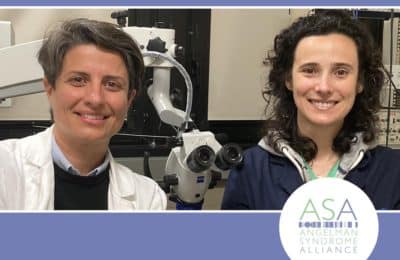
[Image: MaterialsCommons researchers at the Kick-Off Meeting 17 June 2026, in Karlsruhe. Photo credit: Fraunhofer IWM]