Using smartphones to collect noise pollution data
A smartphone-based participatory experiment designed by Cnr Nano researcher in collaboration with a team of colleagues, measured and evaluated the impact of environmental noise in residential areas. The results are published on PlosOne.
Using a smartphone to measure environmental noise on the national territory and associate it with subjective perception of acoustic comfort at the time of measurement. A team of researchers and experts in science communication of the Istituto nanoscienze (Cnr Nano) and of the (formerly) Unità comunicazione relazioni con il pubblico (Ucrp) of the National Research Council (Cnr), the Istituto clinico and Arpa Piemonte, designed an experimental protocol capable of measuring noise in a simple and anonymous way and capable of analyzing the data collected. The results of the study were recently published in PlosOne. "For this Citizen Science project we received in a month 1258 measurements, carried out by participants in their homes and with their personal smartphones," explains research coordinator Carlo Andrea Rozzi from Cnr Nano Modena. "The procedure has allowed to collect the data anonymously and to introduce elements for cross-checking the quality of the collected data, such as the 'measurement of silence': i.e. is the measurement of the sound level at the quietest room and moment, and with closed windows). This allows us to calibrate and correct , thanks to the work carried out previously in the laboratory, the raw noise measurements for each model of smartphone". The experimental protocol devised by the researchers is repeatable. "The protocol can be adapted to other environmental contexts and the experience tells us that it can be improved," concludes Rozzi. "The method can also be used to monitor potentially noisy events or for educational and environmental awareness purposes." The performed measurements on environmental noise pollution were the second experiment of the participatory science campaign #Scienzasulbalcone ('science on the balcony') edited by the Communication and Public Relations Unit of Cnr, after one realized on the measurement of intrusive light. The Communication and Public Relations Unit of Cnr coordinated the communication campaign and the subsequent data collection phase through the implementation of a dedicated website (https://sites.google.com/view/scienzasulbalcony/sound), while a calibration campaign of some models had been carried out previously at the laboratories of Arpa Piemonte. Citizen-science initiatives offer several societal and educational benefits, in this case the research team pinpointed : the impact on citizens’ perception of the value of scientific data by directly involving them in a scientific research project; contributing  to education in STEM area by providing basic information about sound and its measurement and making people aware of the difficulties in making reliable measurements; spreading knowledge of the merits and limits of measuring sound with smartphones. Moreover, the involvement of pupils and teachers belonging to the compulsory education compartment is fundamental in ensuring equal opportunities for inclusion of people from every social status, and, by the way, it avoids that the sample is biased, e.g., by people owning the most expensive smartphones, or living in privileged contexts. Last, but not least, the possibility of empowering citizens to take an active part in environmental issues, potentially affecting their health. "This research shows that collecting interesting data from a distributed network of citizens on a national scale is indeed a feasible task. We believe that initiatives such as this one, besides their societal impact, also have a potential for actual scientific data collection" concludes Carlo Andrea Rozzi. Rozzi CA, Frigerio F, Balletti L, Mattoni S, Grasso D, Fogola J (2022) Indoor noise level measurements and subjective comfort: Feasibility of smartphone-based participatory experiments. PLoS ONE 17(1): e0262835. https://doi.org/10.1371/journal.pone.0262835
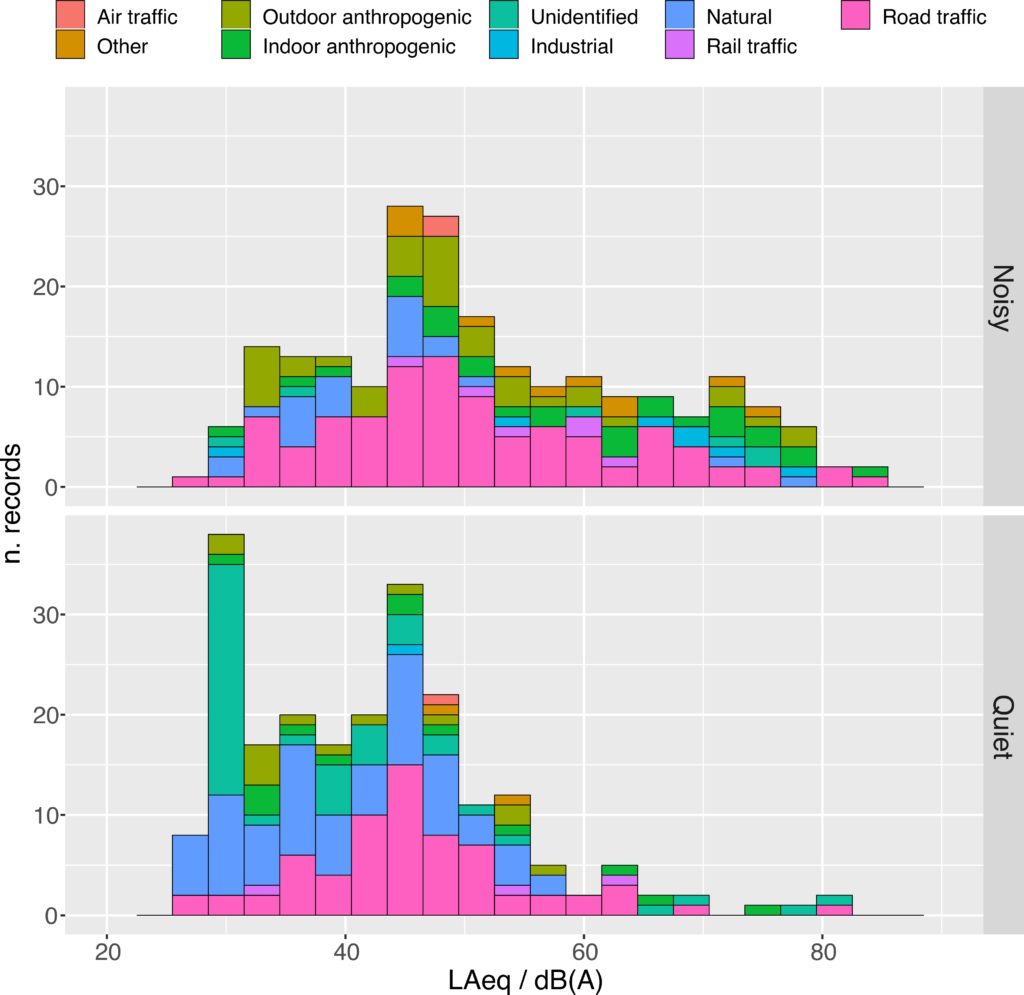
Distribution of sond level LAeq in low and high comfort states

Using a smartphone to measure environmental noise on the national territory and associate it with subjective perception of acoustic comfort at the time of measurement. A team of researchers and experts in science communication of the Istituto nanoscienze (Cnr Nano) and of the (formerly) Unità comunicazione relazioni con il pubblico (Ucrp) of the National Research Council (Cnr), the Istituto clinico and Arpa Piemonte, designed an experimental protocol capable of measuring noise in a simple and anonymous way and capable of analyzing the data collected. The results of the study were recently published in PlosOne.


“For this Citizen Science project we received in a month 1258 measurements, carried out by participants in their homes and with their personal smartphones,” explains research coordinator Carlo Andrea Rozzi from Cnr Nano Modena. “The procedure has allowed to collect the data anonymously and to introduce elements for cross-checking the quality of the collected data, such as the ‘measurement of silence’: i.e. is the measurement of the sound level at the quietest room and moment, and with closed windows). This allows us to calibrate and correct , thanks to the work carried out previously in the laboratory, the raw noise measurements for each model of smartphone”.


The experimental protocol devised by the researchers is repeatable. “The protocol can be adapted to other environmental contexts and the experience tells us that it can be improved,” concludes Rozzi. “The method can also be used to monitor potentially noisy events or for educational and environmental awareness purposes.”


The performed measurements on environmental noise pollution were the second experiment of the participatory science campaign #Scienzasulbalcone (‘science on the balcony’) edited by the Communication and Public Relations Unit of Cnr, after one realized on the measurement of intrusive light. The Communication and Public Relations Unit of Cnr coordinated the communication campaign and the subsequent data collection phase through the implementation of a dedicated website (https://sites.google.com/view/scienzasulbalcony/sound), while a calibration campaign of some models had been carried out previously at the laboratories of Arpa Piemonte.


Citizen-science initiatives offer several societal and educational benefits, in this case the research team pinpointed : the impact on citizens’ perception of the value of scientific data by directly involving them in a scientific research project; contributing  to education in STEM area by providing basic information about sound and its measurement and making people aware of the difficulties in making reliable measurements; spreading knowledge of the merits and limits of measuring sound with smartphones. Moreover, the involvement of pupils and teachers belonging to the compulsory education compartment is fundamental in ensuring equal opportunities for inclusion of people from every social status, and, by the way, it avoids that the sample is biased, e.g., by people owning the most expensive smartphones, or living in privileged contexts. Last, but not least, the possibility of empowering citizens to take an active part in environmental issues, potentially affecting their health.


“This research shows that collecting interesting data from a distributed network of citizens on a national scale is indeed a feasible task. We believe that initiatives such as this one, besides their societal impact, also have a potential for actual scientific data collection” concludes Carlo Andrea Rozzi.

Rozzi CA, Frigerio F, Balletti L, Mattoni S, Grasso D, Fogola J (2022) Indoor noise level measurements and subjective comfort: Feasibility of smartphone-based participatory experiments.

PLoS ONE 17(1): e0262835. https://doi.org/10.1371/journal.pone.0262835

Distribution of sond level LAeq in low and high comfort states

Related Content

Superconducting demultiplexers open new pathways for quantum computer scalability

Superconducting demultiplexers open new pathways for quantum computer scalability

Researchers at Cnr Nano and Scuola Normale Superiore developed a hybrid superconducting device that can potentially transform the way signals…
ERC Advanced Grant awarded to Miriam Serena Vitiello for groundbreaking research in quantum photonics

ERC Advanced Grant awarded to Miriam Serena Vitiello for groundbreaking research in quantum photonics

The NODE project will develop compact solid-state laser sources by integrating semiconductor heterostructures and 2D quantum materials, enabling ultrafast light…
DSQM, a CnrNano spinoff, receives the America Innovation Award for the second time

DSQM, a CnrNano spinoff, receives the America Innovation Award for the second time

The Italy USA Foundation, which honors top Italian innovators behind startups, has awarded DSQM for its excellence in superconducting devices…