Diradicals evaporation on the cover
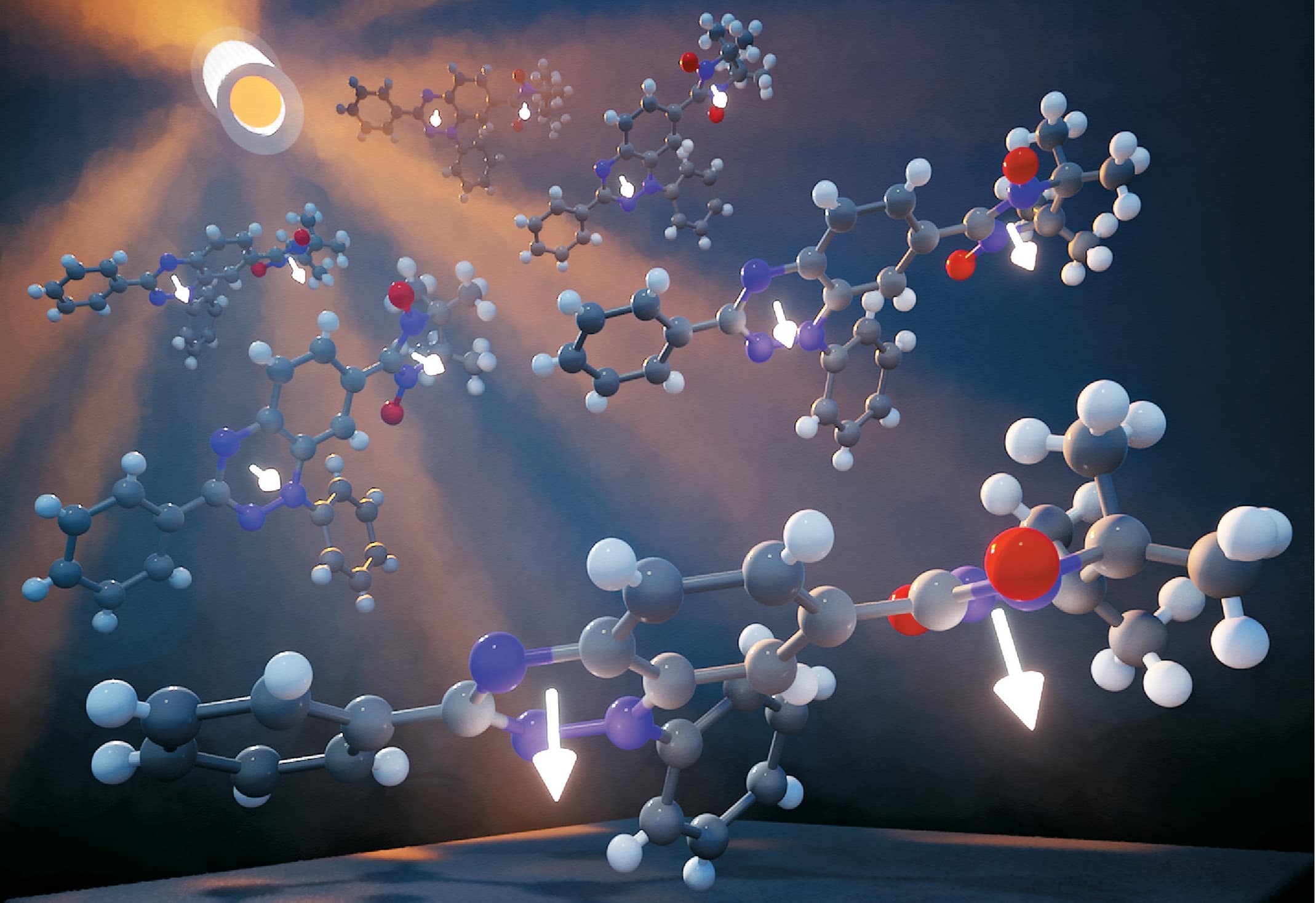
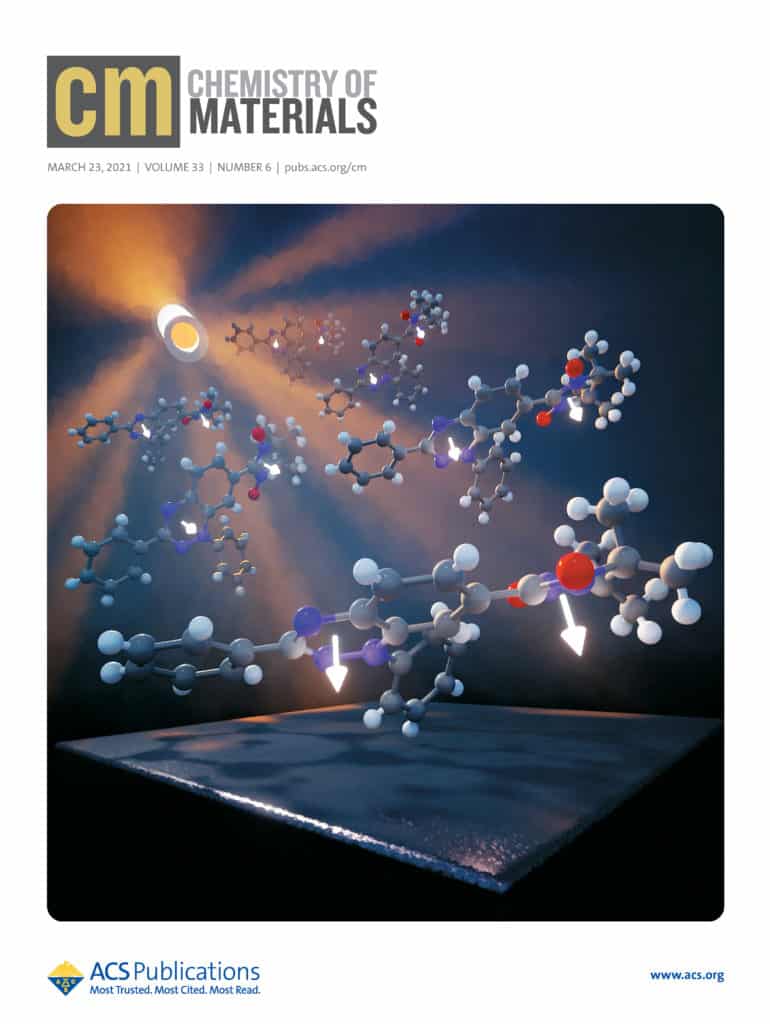
It is possible to evaporate diradicals in a controlled environment without degradation! Arrigo Calzolari latest reserach article published on the cover of Chemistry of materials journal.

Arrigo Calzolari's recent paper "Challenges in Controlled Thermal Deposition of Organic Diradicals" hits the cover of the last issue of Chemistry of materials journal (March 23, 2021, Volume 33, Issue 6).


Arrigo Calzolari from CnrNano and Maria Benedetta Casu from the University of Tubingen, in collaboration with colleagues from University of Nebraska, Max Planck Institute for Polymer Research, Mainz and Helmholtz-Zentrum Berlin, demonstrated that it is possible to evaporate diradicals in a controlled environment without degradation. The presence of two radical sites makes the molecules reactive, and difficult to deposit in thin films that are necessary for any realistic application.

Researchers explored the parameters that play a role in this phenomenon. They found that the higher the formation energies of the crystal, the more difficult is the evaporation of intact radicals, as well as that large delocalization of the unpaired electrons helps the diradical to stand evaporation.
Read the complete article.
Arrigo Calzolari’s recent paper “Challenges in Controlled Thermal Deposition of Organic Diradicals” hits the cover of the last issue of Chemistry of materials journal (March 23, 2021, Volume 33, Issue 6).


Arrigo Calzolari from CnrNano and Maria Benedetta Casu from the University of Tubingen, in collaboration with colleagues from University of Nebraska, Max Planck Institute for Polymer Research, Mainz and Helmholtz-Zentrum Berlin, demonstrated that it is possible to evaporate diradicals in a controlled environment without degradation. The presence of two radical sites makes the molecules reactive, and difficult to deposit in thin films that are necessary for any realistic application.

Researchers explored the parameters that play a role in this phenomenon. They found that the higher the formation energies of the crystal, the more difficult is the evaporation of intact radicals, as well as that large delocalization of the unpaired electrons helps the diradical to stand evaporation.
Read the complete article.

Related Content

Graphene-Boosted laser breaks into the Terahertz forbidden band

Graphene-Boosted laser breaks into the Terahertz forbidden band

By leveraging graphene plasmonics and optical nonlinearity, Cnr Nano researchers extend semiconductor laser emission to 10 THz, reaching a frequency…
LESGO Project shows advanced hydrogen storage using graphene oxides

LESGO Project shows advanced hydrogen storage using graphene oxides

After three and a half years, the LESGO consortium demonstrated an innovative hydrogen storage technology, developed with key contributions from…
Unlocking Far-Infrared with the first compact 9 THz source

Unlocking Far-Infrared with the first compact 9 THz source

Researchers developed the first miniaturized and efficient technology for producing waves in the far-infrared range. The result fills a technological…