
Schwinger effect in superconductors: a discovery by CnrNano and UniGenova
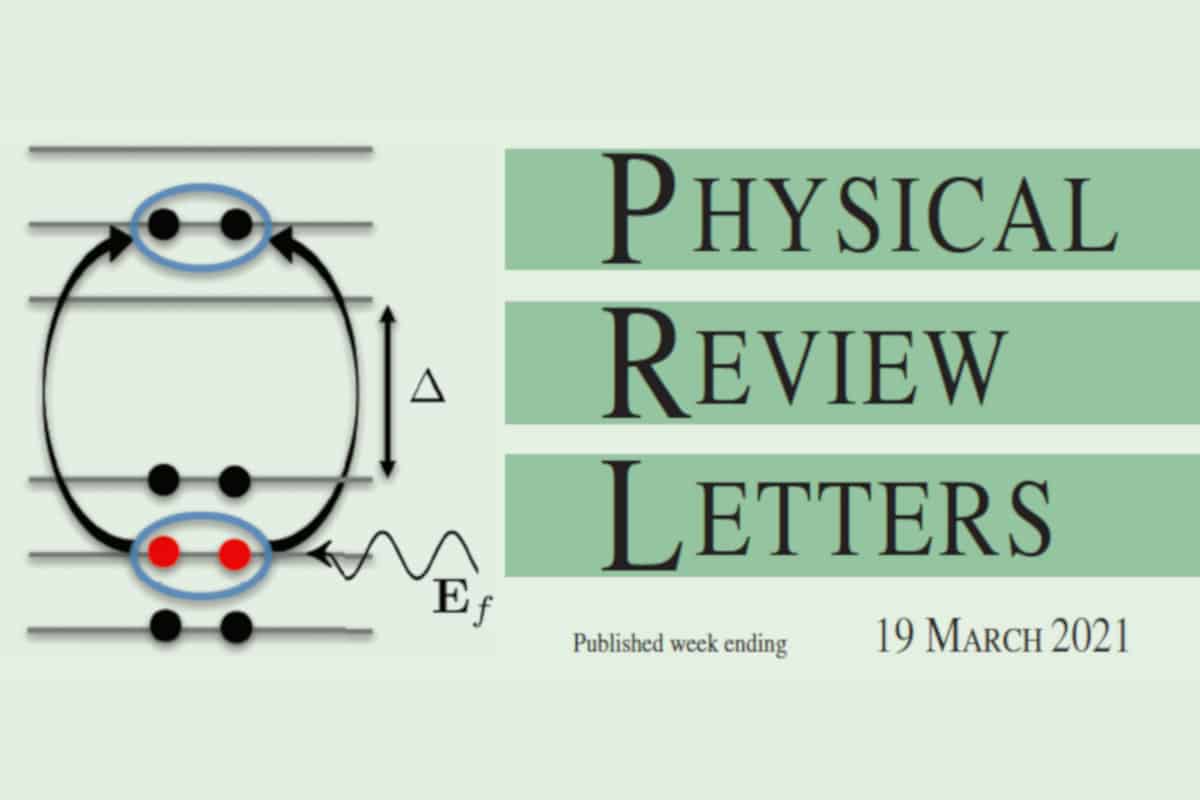
Researchers from CnrNano and University of Geona have discovered that the Sauter-Schwinger effect could finally be realised in a regular low-temperature superconducting material. The research appears as the cover story on the journal Physical Review Letters.
Francesco Giazotto of Cnr-Nano, at the NEST Laboratory of the Scuola Normale Superiore, together with Paolo Solinas, Andrea Amoretti of the Physics Department of the University of Genoa have discovered how it is possible to generate pairs of quasi-particles in superconducting materials by applying high electric fields. This result has important theoretical implications and technological applications in fields ranging from quantum computing to metrology. In the 1950s the physicist Julian Schwinger predicted that it was possible to create an electron-positron pair from vacuum, through the application of a very intense electric field. So far this prediction has not found experimental verification, due to the very intense electric fields required (~ 10^18 V / m) which are not yet accessible in physics laboratories. The new discovery made by the team shows that a similar effect can occur in superconducting materials, under the action of electric fields that can be created in the laboratory. The article Sauter-Schwinger Effect in a Bardeen-Cooper-Schrieffer Superconductor has been published on the journal Physical Review Letters, and selected as the cover story. "Our study shows that an electrostatic field can generate two coherent excitations from the superconducting ground-state condensate" says Giazotto. "Differently from the dissipative thermal excitation, these ones form a new macroscopically coherent and dissipationless state. In our article we also discuss how the superconducting state is weakened by the creation of this kind of excitations". These results are shedding a different light and suggesting a method for the experimental verification of the Sauter-Schwinger effect. Moreover they pave the way to the understanding and exploitation of the interaction between superconductors and electric fields.

Francesco Giazotto of Cnr-Nano, at the NEST Laboratory of the Scuola Normale Superiore, together with Paolo Solinas, Andrea Amoretti of the Physics Department of the University of Genoa have discovered how it is possible to generate pairs of quasi-particles in superconducting materials by applying high electric fields. This result has important theoretical implications and technological applications in fields ranging from quantum computing to metrology.

In the 1950s the physicist Julian Schwinger predicted that it was possible to create an electron-positron pair from vacuum, through the application of a very intense electric field. So far this prediction has not found experimental verification, due to the very intense electric fields required (~ 10^18 V / m) which are not yet accessible in physics laboratories. The new discovery made by the team shows that a similar effect can occur in superconducting materials, under the action of electric fields that can be created in the laboratory. The article Sauter-Schwinger Effect in a Bardeen-Cooper-Schrieffer Superconductor has been published on the journal Physical Review Letters, and selected as the cover story.

“Our study shows that an electrostatic field can generate two coherent excitations from the superconducting ground-state condensate” says Giazotto. “Differently from the dissipative thermal excitation, these ones form a new macroscopically coherent and dissipationless state. In our article we also discuss how the superconducting state is weakened by the creation of this kind of excitations”.

These results are shedding a different light and suggesting a method for the experimental verification of the Sauter-Schwinger effect. Moreover they pave the way to the understanding and exploitation of the interaction between superconductors and electric fields.
Related Content

2nd Italian Glia Network Symposium: Cnr Nano among the organizers

2nd Italian Glia Network Symposium: Cnr Nano among the organizers

The online event brought together the Italian and international neuroscience community to discuss the emerging role of glial cells in…
Innovative GFP-based sensor paves the way for rapid virus detection in clinical settings

Innovative GFP-based sensor paves the way for rapid virus detection in clinical settings

Cnr Nano team developed a FRET-based sensor that detects the SARS-CoV-2 Spike protein in biological fluids, leveraging GFP fluorescence and…
Flexible and biodegradable nanocellulose piezoelectric arrays for medicine and energy

Flexible and biodegradable nanocellulose piezoelectric arrays for medicine and energy

Researchers at the Cnr Nano have developed flexible, biodegradable piezoelectric devices made from cellulose nanocrystals. These high-performance devices offer innovative…